

Some links in this post are Amazon affiliate links. If you buy through one I may earn a small commission, at no extra cost to you. It never changes what I recommend. Full disclosure.
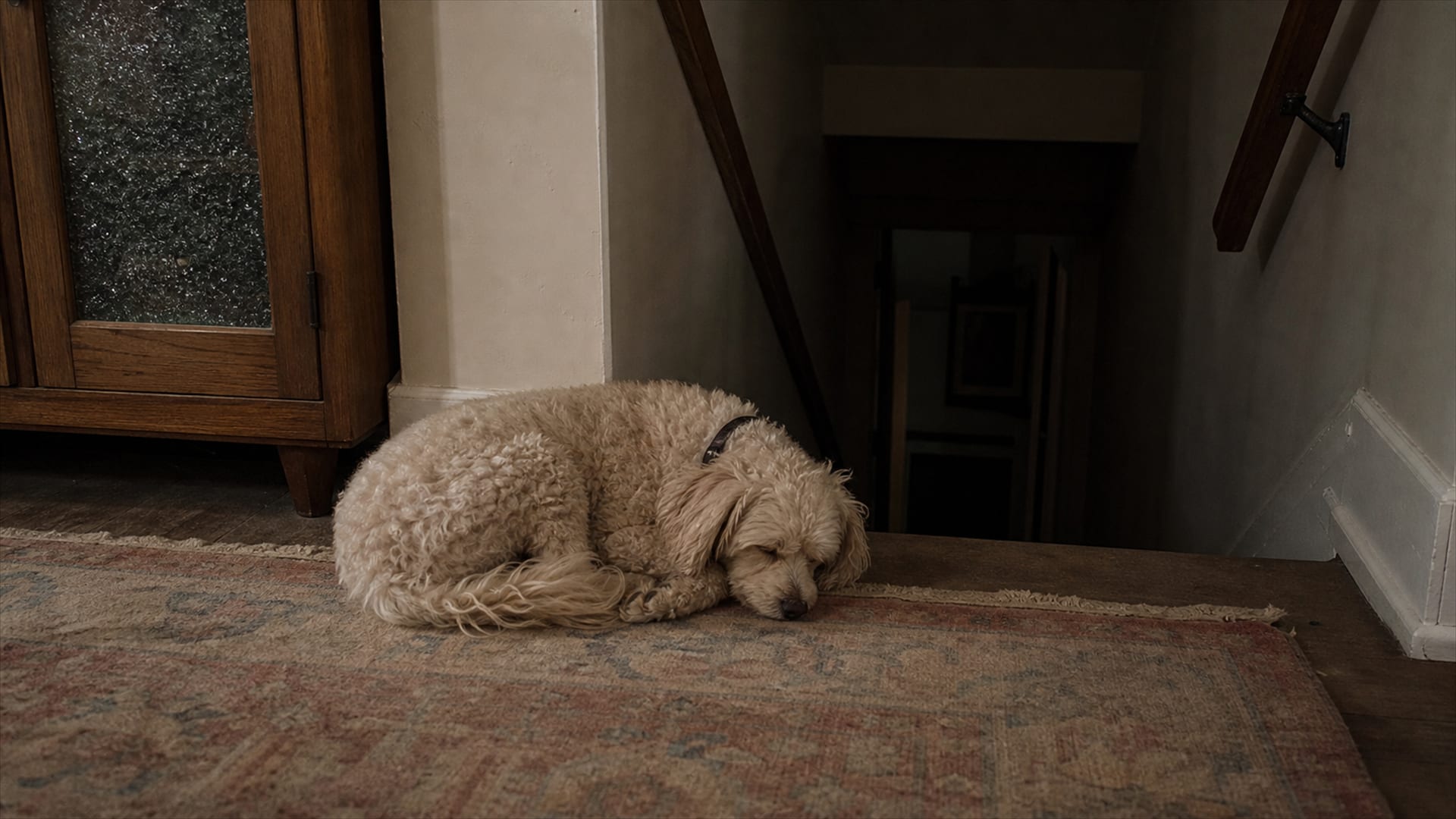
Stop trying to wake, move or touch the dog while it sleeps. Don't punish it, grab it or test how close you can get. Give it a bed behind a door, gate or pen, keep children completely away if the dog reacted toward one, and book a vet visit. What you saw is usually a defensive reaction to being disturbed. The Merck Veterinary Manual places it in conflict aggression, not rank. It is not proof the dog is just tired, and a vet should look at the dog first.
Key takeaways
Hover or tap a card to bring it forward.
- Stop waking, touching or moving the dog while it sleeps, and never punish or test it.
- Give the dog a protected sleeping place behind a door, gate or pen, and keep children completely away if the dog reacted toward a child.
- A vet should look first, because pain, sensory loss, cognitive dysfunction, medication effects and sleep disorders can all be involved.
- In the first week, adults wake the dog only if needed, by voice from a distance, and keep a short record and film only from far away.
- Get a veterinary behaviorist or qualified professional involved after any snap, lunge, bite or reaction toward a child, and mention it on the first call.
What happens when a sleeping dog is woken or touched
Plenty of owners tell me the dog is gentle in every other moment. That fits. A dog can be calm when fully awake and still react defensively in the few seconds between sleep and waking. People call it sleep startle, sleep aggression or startle reflex. Battersea describes a sudden fearful reaction when a dog is unexpectedly woken, and it can include growling, snapping, lunging or biting.
Battersea says it can happen at any age, size or breed. The charity sees it more often in dogs with little experience living around people, such as some ex-racing greyhounds, former street dogs and dogs from puppy farms. That is a welfare organisation's description of the dogs it meets, not a count of how common the problem is, so don't read your own dog's breed into it.
The label also doesn't settle why your dog reacted. Pain, sensory loss, neurological disease and learned aggression can all look the same from the outside. Learning plays a part. If growling makes everyone back off every time, the dog learns that growling works, and the reaction can harden.
Medical possibilities to raise with your vet
This is the part I would not skip. A new or worsening reaction to being disturbed is a medical question until a vet says otherwise.
Pain lowers a dog's tolerance for being touched or moved. VCA lists the ears, teeth and gums, bones, joints, back and anal sacs as common painful areas. A dog with arthritis may threaten instead of moving away, because moving hurts. Someone shifts a hip or touches a sore spot while the dog is half asleep, and the dog answers before it is fully awake.
Hearing or vision loss can have the same effect. A dog that doesn't hear you coming, or can't tell who is looming over the bed, can wake to a sudden person right beside it. The ASPCA lists arthritis, dental disease, hypothyroidism, cancer, impaired sight or hearing, urinary disease and Cushing's disease among conditions that can raise irritability and aggression in older dogs, and it puts a veterinary exam first.
Cognitive dysfunction can bring night restlessness, confusion and new fear or aggression. It is a diagnosis a vet makes after other causes are considered, not a conclusion to reach because a dog is old.
Medication matters too. The Merck Veterinary Manual says some dogs show lethargy or lower activity in the first week on behavior medication, and that response varies from dog to dog. Give your vet a full list of every drug and supplement, including recent changes, and don't start, stop or adjust anything on your own.
Sleep disorders a vet can tell apart
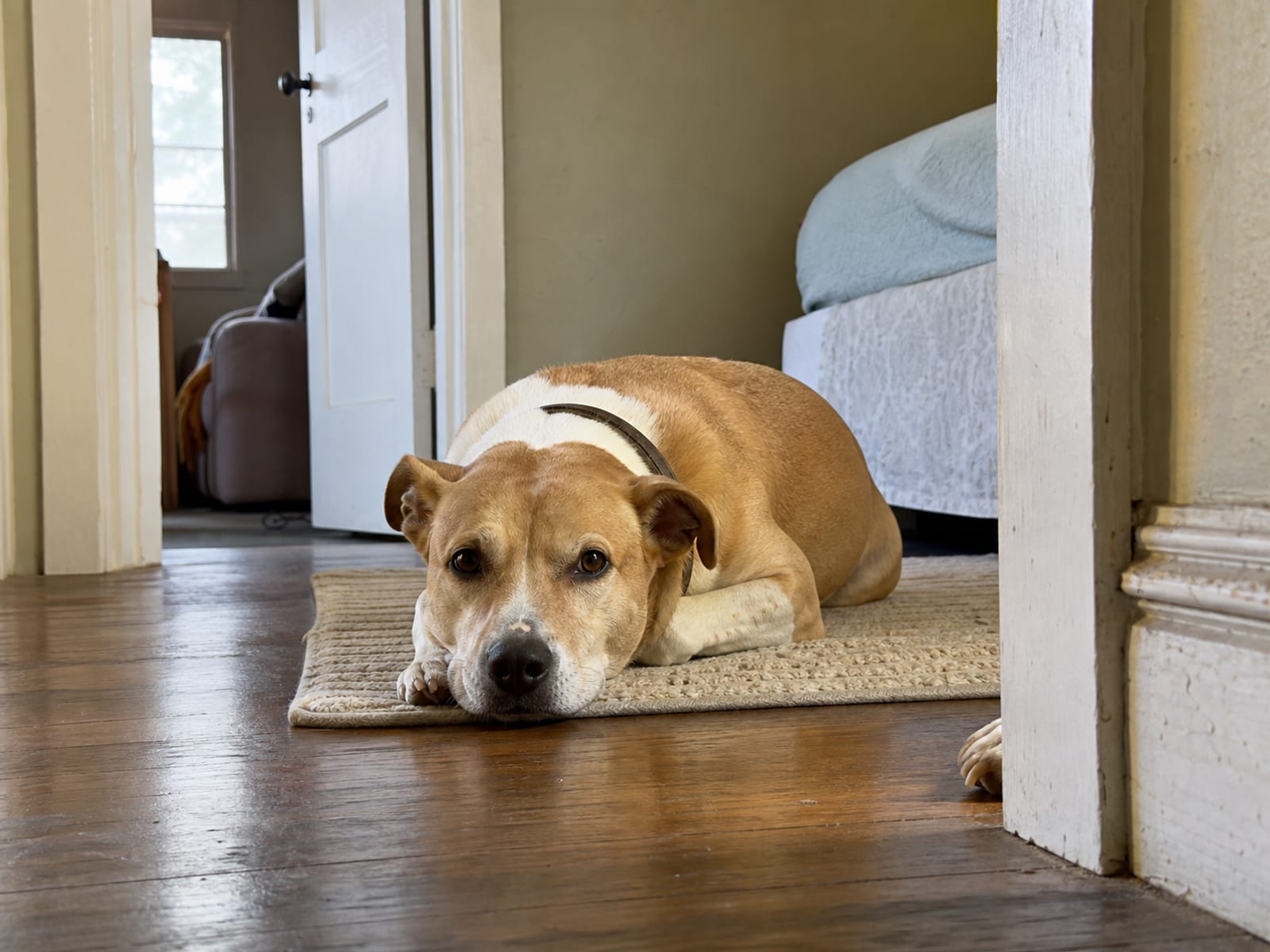
Some dogs have an actual sleep disorder, and a vet can separate these from sleep startle. In REM sleep behavior disorder, a dog paddles, runs, chews or vocalises while still asleep. Bush and colleagues reported a 9-month-old Labrador mix in 2004, diagnosed with video-EEG. That is one case report, not a rate. Narcolepsy with cataplexy brings sudden sleep and collapse, often during excitement like play or feeding. A 2021 veterinary review of canine sleep disorders covers both.
If you see paddling, stiffening, repeated crying out, collapse, confusion or loss of awareness during sleep, call the vet. Film an episode safely from a distance, because most sleep events won't happen in the exam room.
Hover or tap a row to highlight it.
| Possible cause | How it can lead to a reaction | What to tell your vet |
|---|---|---|
| Pain | Lowers tolerance for being touched or moved, and a dog with arthritis may threaten instead of moving away | Sore areas you have noticed, such as ears, teeth, joints or back |
| Hearing or vision loss | A dog that cannot hear or see you coming wakes to a sudden person beside it | Any hearing or vision change you have noticed |
| Illness such as hypothyroidism, Cushing's disease, dental or urinary disease | Can raise irritability and aggression, especially in older dogs | Changes in appetite, elimination or behavior |
| Cognitive dysfunction | Can bring night restlessness, confusion and new fear or aggression, diagnosed only after other causes are considered | Changes in sleep, night pacing, confusion or new anxiety |
| Medication effects | Some dogs show lethargy or lower activity in the first week on behavior medication | Every drug and supplement, including recent changes |
Hover or tap a row to highlight it.
| Condition | When it happens | What you may see |
|---|---|---|
| Sleep startle | In the moments of being woken unexpectedly | Growling, snapping, lunging or biting as the dog wakes |
| REM sleep behavior disorder | While the dog is still asleep | Paddling, running, chewing or vocalizing |
| Narcolepsy with cataplexy | Often during excitement such as play or feeding | Sudden sleep and collapse |
What sleep studies do show
Keep this one small. Sleep numbers vary with age, setting and how sleep is measured, and owner estimates, video coding and EEG measure different things. In the Generation Pup study, owners of 2,332 dogs at 16 weeks and 1,091 dogs at 12 months reported mean total sleep of 11.2 hours at 16 weeks and 10.8 hours at 12 months. Takeuchi and Harada recorded four aged dogs, 16 to 18 years old, and found more fragmented sleep than in four young dogs. Kis and colleagues showed that dog sleep EEG resembles human sleep EEG, using 22 pet dogs.
Two studies looked at behavior. Schork and colleagues watched 13 laboratory dogs for five 24-hour periods and linked more fragmented sleep with less play and less alertness the next day. Goold and Newberry watched 15 shelter dogs with usable video and found that more daytime resting went with more relaxed behavior and less repetitive behavior. Both were observational, and the authors could not separate cause from effect.
So, what do you do with that? Treat a sleep-related snap as a safety and medical matter, not as proof the dog is overtired. I'd never tell you a certain number of hours prevents biting.
Hover or tap a row to highlight it.
| Study | Dogs | How sleep was measured | What it found |
|---|---|---|---|
| Generation Pup | 2,332 dogs at 16 weeks, 1,091 at 12 months | Owner questionnaires | Owners reported average total sleep of 11.2 hours at 16 weeks and 10.8 hours at 12 months |
| Takeuchi and Harada | Four aged dogs, 16 to 18 years old, and four young dogs, 3 to 4 years old | EEG recorded over 24 hours | More fragmented sleep in the aged dogs |
| Kis and colleagues | 22 pet dogs | Non-invasive EEG | Dog sleep EEG resembles human sleep EEG |
| Schork and colleagues | 13 laboratory dogs | Video over five 24-hour periods | More fragmented sleep went with less play and less alertness the next day |
| Goold and Newberry | 15 shelter dogs | Video over five days | More daytime resting went with more relaxed behavior and less repetitive behavior |
What to do in the first week
Run the house on strict management while you wait for the vet.
- Adults only wake the dog, and only when needed, by voice from a distance. Wait until the dog is clearly awake before anyone steps closer, as Battersea advises.
- Find the dog's safe distance. That is how far away you can talk or move without the dog stiffening, freezing, growling, snapping or lunging. If it reacts, add distance and stop. Never test how close you can get.
- Keep the dog off beds and sofas if anyone might need to move it or could brush against it.
- Keep a short record: time, place, sleeping surface, who approached, what happened, whether the dog was touched, and how fast it became fully alert.
- Film only from a distance, and only if filming won't disturb the dog.
I can't hand you a fixed first-week training plan, and no wake-up cue works for every dog. Lean on distance, voice and predictable access. If you want a cue, teach it while the dog is awake and relaxed, and use it from far enough away that nobody startles anybody.
Where the dog sleeps matters. Battersea suggests an individual spot in a quiet area, away from hallways and busy kitchens, with a crate if the dog is comfortable in one. Tufts veterinary behaviorist Nicholas Dodman says dogs that growl or bite when disturbed while resting, or that guard the bed, should not sleep in it. He recommends a crate, pen or gated area when children are in the home.
If a dog also growls over the bed or sofa as if it owns the space, that overlaps with what I wrote about managing territorial aggression at home. The sleeping spot is often part of the problem, and a separate resting place with controlled access removes the argument.
Household changes can make a dog jumpier about sleep, and Battersea says the settling-in period for a new dog can make sleep startle more likely. A new pet, a move, renovation, changed routines and more night noise all count. My guide to environmental triggers for dog aggression shows how to find and reduce them. Fear plays a part as well, and anxiety-based aggression is the place to read about it.
Waking a Dog That Reacts
- Stay at your safe distanceStop where you can talk or move without the dog stiffening, freezing, growling, snapping or lunging.
- Use your voiceSay the dog's name from that distance. Never touch, shake or move a sleeping dog.
- Wait for the dog to be clearly awakeLook for the dog to turn toward you or move toward you.
- Call the dog to youInvite the dog over and away from its sleeping spot, rather than walking up to it.
- Add distance if it reactsIf the dog stiffens or growls, back off and stop. Never test how close you can get.
Children and sleeping dogs
The American Veterinary Medical Association says children should never disturb a sleeping dog, and that babies and small children should never be left alone with a dog, even a familiar family pet.
After any growl, snarl, snap or bite toward a child, VCA says to end the interaction and not to scold the dog, because punishment can raise fear and aggression. Keep the dog completely apart from the child until a vet and a veterinary behaviorist or qualified professional have assessed it. In practice, that means a gate a child can't reach through, a pen or a closed door. Adults manage access. Don't rely on a small child to remember a rule.
If anyone was bitten, get medical care and follow your local bite-reporting and rabies guidance.
If another dog is the one wandering over to a sleeping dog, the same barrier logic applies. My piece on stopping a dog's aggression toward other dogs covers that side.
After a Growl, Snap or Bite Toward a Child
- End the interactionStop it right away and do not scold the dog, because punishment can raise fear and aggression.
- Keep them apartUse a gate a child cannot reach through, a pen or a closed door, and let adults manage access.
- Get the dog assessedA vet and then a veterinary behaviorist or qualified professional should assess the dog before the dog and child share space.
- Get medical care if neededIf anyone was bitten, get medical care and follow local bite-reporting and rabies guidance.
When to get help
See the vet first for anything sudden or worsening, anything in an older dog, anything after a medication change, and any pacing, disorientation, stiffness, or hearing or vision change. The ASPCA says to start with a veterinary exam because pain, thyroid or adrenal problems, cognitive dysfunction, seizures, sensory loss and medication effects can all feed aggression.
Then bring in a veterinary behaviorist or qualified professional if the dog has snapped, lunged, bitten, guarded a bed or sofa, reacted to children, or can't be kept safe with ordinary barriers. VCA says aggression can need long-term management and may not be fully eliminated. Behavior varies a lot by dog, and the overview of aggression in specific breeds is worth a look if you wonder how breed fits in.
If your dog needs more than advice from a page, I offer an evaluation visit, in-home lessons, and board and train in my own home. Tell me about any bite or near-bite on the first call, so I know what we're working with before anyone walks in the door. For the wider picture of how I approach this kind of problem, start with the complete guide to stopping aggressive behavior in dogs.
FAQ
Is sleep aggression in dogs a medical problem or a behavior problem?
It can be either, or both, so the vet comes first. Pain, arthritis, hearing or vision loss, cognitive dysfunction and medication effects can all make a dog react when disturbed. A behavior professional adds the most once those have been looked at.
Can I train my dog out of sleep startle?
Training can help once the dog is safe and medical causes are addressed, but no protocol is guaranteed. The reliable work is management: distance, voice, a protected sleeping place and predictable access. A professional can build on that with you.
Should a dog that snaps when woken stay on the bed?
If anyone might need to move the dog, no. Dodman says dogs that growl or bite when disturbed, or guard the bed, should sleep elsewhere, and a crate, pen or gated area works when children are in the home.
Why does it happen more in some dogs?
Battersea reports it more often in dogs with little experience living around people, like some ex-racing greyhounds, former street dogs and puppy-farm dogs. It can also happen in any dog of any age, size or breed, so a clean history doesn't rule it out.
Check What You Picked Up
What should you do first when a sleeping dog has growled or snapped at you?
How should an adult wake a dog in the first week, only when needed?
What is the dog's safe distance?
What does the AVMA say about children and sleeping dogs?
Which of these can look like sleep startle from the outside?
Answer a question to see your score.
Final Thoughts
Some dogs need more than advice from a page. I offer an evaluation visit, in-home lessons, and board and train in my own home for dogs whose problem needs hands-on work. If your dog has bitten or nearly bitten anyone, say so on the first call so I can plan safely. You can reach DW Dog Training through the contact page.