

Some links in this post are Amazon affiliate links. If you buy through one I may earn a small commission, at no extra cost to you. It never changes what I recommend. Full disclosure.
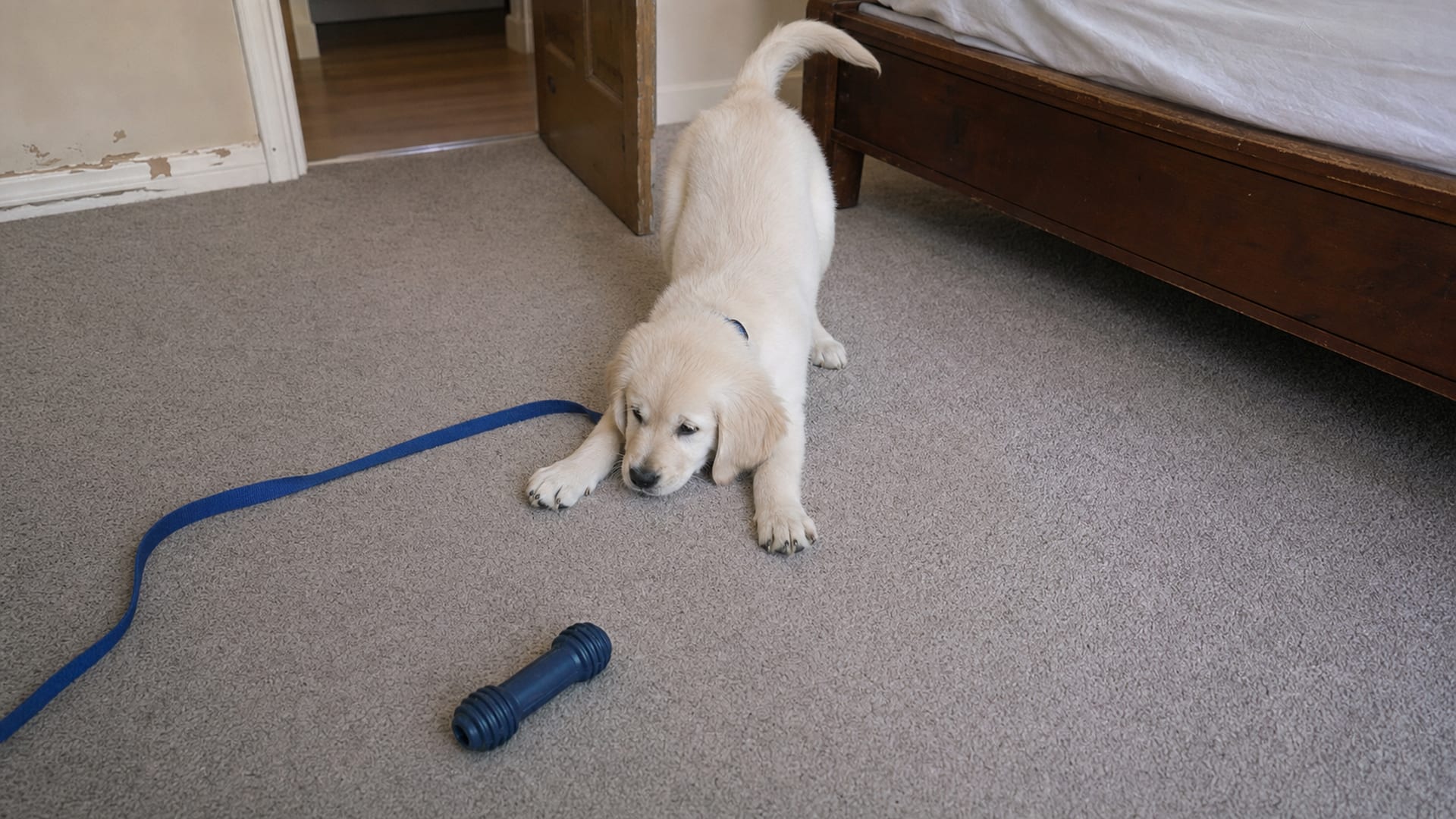
If your puppy is biting hard, do this first. The instant teeth touch skin, stop the game and take your attention away. Keep children out of reach while the puppy is biting hard or guarding something. Then sort what you are seeing: play biting, or biting that needs a professional. Handling, guarding, freezing, a stiff or staring puppy, a bite that breaks skin, or any bite aimed at a child all point to a professional.
I would also drop the word "tame." It is not the right frame for a young puppy. What you need is bite control, daily management and a vet or behavior check. The steps below are for the puppy that is already biting hard and what to do this week. Telling normal puppy behavior from warning signs, and the socialization window, is a separate subject.
Key takeaways
Hover or tap a card to bring it forward.
- Stop the game and withdraw attention the instant teeth touch skin, and keep children away from a puppy that is biting hard or guarding.
- Call it bite control and management, not taming, and get a vet check for sudden, escalating, handling-linked or guarding behavior.
- Use a toy, a known cue, a short quiet break, trades and "easy" to teach softer mouths, and do not hit, yell or hold a puppy down.
- Run a predictable day with short play, chews, a settle spot and rest, but do not count on enrichment alone to stop biting.
- After a bite that breaks skin, a repeated bite or any bite to a child, bring in a veterinary behaviorist or an experienced trainer.
Why a puppy bites or growls
Most puppy biting is play. VCA's veterinary behaviorist-written handout says nipping, mouthing and biting in young dogs are generally social play, and loose body language, play bows and chasing support that reading. Teething is real, but VCA says it more often sends a puppy gnawing on objects than biting people.
Other drivers are less harmless:
- Over-arousal and tiredness. AKC trainers describe puppies getting wound up in play, and they suggest quiet time, a potty break, food or water, or a nap when the biting escalates.
- Fear or stress. VCA lists hiding, trembling, stress diarrhea, growling, lunging or biting at normal things as abnormal stress signs.
- Guarding. VCA defines resource guarding as aggressive behavior around food, toys, beds, people or other prized items. Watch for freezing, a hard stare, rapid eating, growling and lunging.
- Pain and handling conflict. The Merck Veterinary Manual lists physical restraint, handling, control of food or toys, pain and medical disease as triggers.
- Redirected bites. A puppy that cannot reach what it wants may bite the person who steps in.
Hover or tap a row to highlight it.
| Cause | What you may see | What helps |
|---|---|---|
| Play | Loose body language, play bows, chasing, tugging | Stop the game when teeth touch skin |
| Over-arousal or tiredness | A puppy wound up in play, biting more as it escalates | Quiet time, a potty break, food or water, or a nap |
| Fear or stress | Hiding, trembling, stress diarrhea, growling, lunging | A vet check and a behavior assessment |
| Guarding | Freezing, a hard stare, rapid eating, growling, lunging | Keep children away and call a professional |
| Pain or handling conflict | Biting during handling, restraint or control of food or toys | A physical exam by the vet |
See the vet first, or alongside
Sudden biting, biting that keeps getting worse, biting tied to handling, guarding, an injury to a person, or biting linked to fear all deserve a physical exam. Merck's behavior-diagnosis guidance also calls for a complete neurological exam and further tests when they are indicated.
The questions the vet is answering are medical. Is something painful, whether orthopedic, dental, skin or gut? Is there neurological disease? Kidney or liver trouble? A thyroid or adrenal problem? A medication effect? Pay attention to whether the behavior changes with touch, movement, eating, sleep or restraint, and tell the vet. Medical problems can make a puppy irritable and defensive. A veterinary behaviorist is the right call when the aggression is repeated, severe, hard to read, or has already led to bites.
Ten steps that work on the biting
These are the interrupt and redirect steps, and every one has a named source. Use them in order of how your puppy responds, not as a checklist to run through in one sitting.
1. Stop the instant teeth touch skin. AKC says to end the interaction right then. Turn away, tuck your hands into your armpits, stand up or leave the room for about five seconds. The point is to take away the thing the puppy was working for, which is your attention. 2. Offer a toy instead of hands. AKC trainer Kathy Santo recommends handing over a toy the moment hands become the target. Pick toys large enough to keep your fingers well away from the mouth. 3. Ask for a known cue, then reward. Santo also suggests redirecting to something the puppy already knows, such as sit, followed by a toy or a treat. 4. Use one "ouch," then go quiet. AKC's trainer helpline describes a high-pitched yipe or "ouch" followed by about 30 seconds of no attention. This is the same message a littermate would send, which is how ASPCA and VCA say puppies first learn to soften their bites. 5. Skip the squeal if it backfires. AKC warns that some puppies get more excited when people squeal. If yours does, turn away quietly and end the game instead. 6. Give a calm crate break. If biting continues after several tries, AKC says the puppy can be calmly placed in a crate to settle, with a safe chew. It is a rest, never a punishment. 7. End play when the puppy grabs clothing or skin. VCA says to stop at once and restart only when the puppy is settled. 8. Play controlled tug and teach the release. VCA describes tug as an outlet when the puppy learns to let go on cue and gets a favorite item for doing it. 9. Trade, and raise the value. AKC's trade guidance is to offer a lesser item for the one in the puppy's mouth, then swap for something better. Start with low-value objects and make the trades richer as the puppy accepts them. 10. Teach "easy." During gentle play, say it quietly and reward softer contact.
Bite inhibition means softer bites, not no mouth at all, so do not expect a puppy to stop using its mouth. You can start this work the day the puppy comes home. A puppy-specific age for teaching "leave it" is not set; begin with simple disengagement games when your puppy can calmly take food and give it back, and ask a trainer to adapt the exercise to your dog.
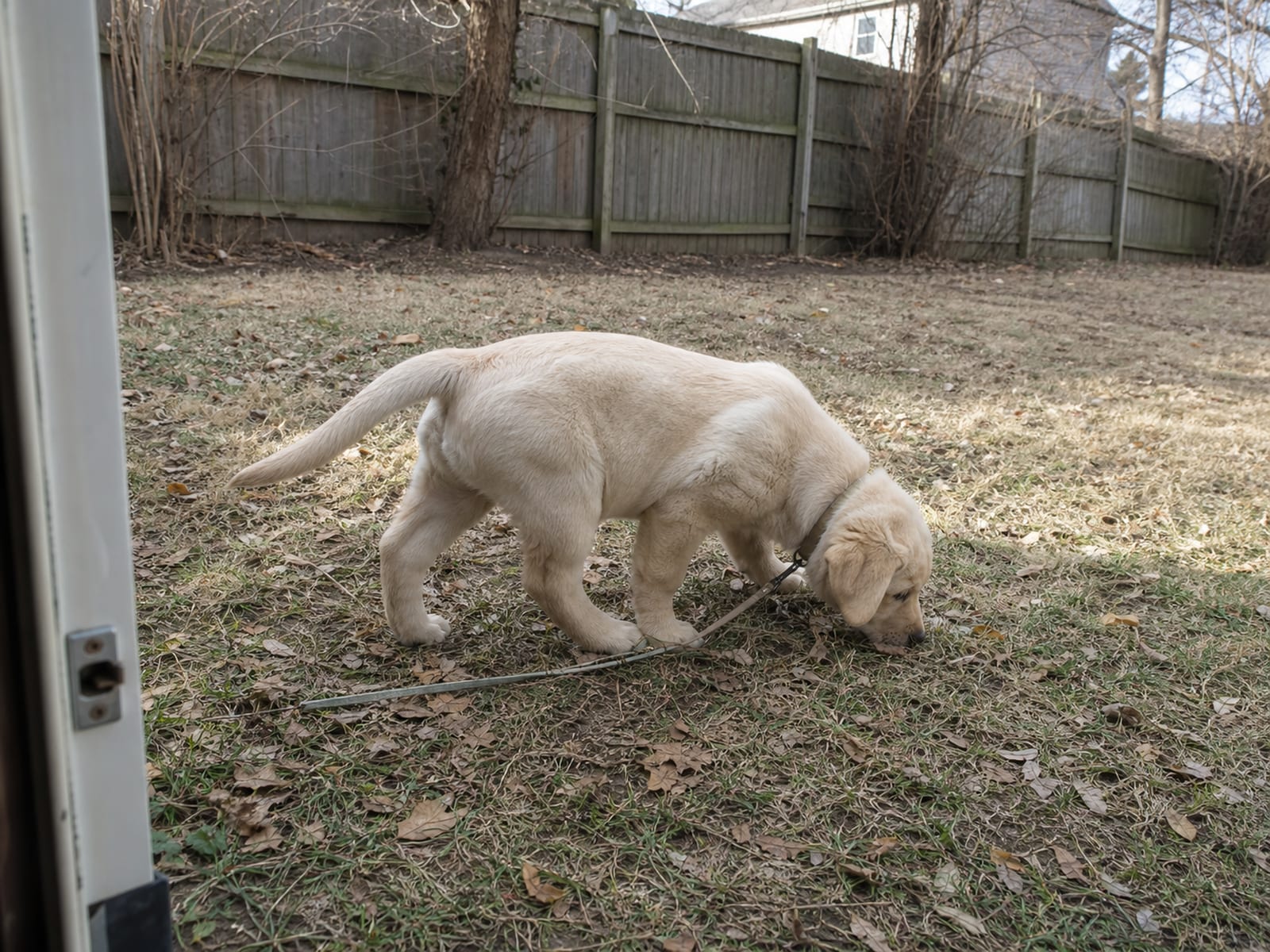
What to do when teeth touch skin
- Stop right awayEnd the interaction the instant teeth touch skin. Turn away, tuck your hands in your armpits, stand up or leave the room for about five seconds.
- Offer a toyHand over a toy that is large enough to keep your fingers well away from the mouth.
- Ask for a known cueRedirect to something the puppy already knows, such as sit, then reward with a toy or a treat.
- One "ouch," then quietUse a high-pitched yipe or "ouch," then give about 30 seconds of no attention. Skip the squeal if it only winds the puppy up.
- Calm crate breakIf biting continues after several tries, place the puppy calmly in a crate with a safe chew to settle. It is a rest, never a punishment.
- Restart when settledBegin play again only when the puppy is calm. Trades, controlled tug with a release cue and a quiet "easy" build softer mouths over time.
Running the day so the biting has fewer chances
A tired, overexcited puppy bites more, so the schedule matters as much as the interrupt. VCA's guidance on enrichment and scheduling calls for many short play periods instead of roughhousing, controlled tug, fetch and hide-and-seek, food toys and chews, and a predictable routine for exercise, training, feeding, potty breaks and sleep.
After exercise, food and a potty break, send the puppy to a settle spot such as a crate, pen or mat. When the puppy is wound up or cannot be watched, use quiet confinement with a chew. This routine is not a treatment for biting. A 2020 survey of pet dogs linked activity and social life with less fear of novel surfaces, and a 2022 pilot of 10 training dogs saw more relaxation with enrichment. Neither tested puppy biting, so treat the routine as the setup that gives your steps a chance, and call a professional if the biting continues or escalates.
What not to do, and what the research does and does not show
The sources agree on the basics. Hitting, nose tapping, yelling and rough handling are called inappropriate, and VCA notes that pain can raise anxiety, defensiveness, aggression or excitement. Skip rolling a dog onto its back and holding it down as well, and the trainers who sell it as a method.
Three studies get quoted on this, and each has limits:
- Hiby, Rooney and Bradshaw, 2004: a questionnaire of 364 owners. The more tasks an owner trained with punishment, the more problem behaviors the owner reported, including aggression-related ones. These were owner reports, and the study cannot show cause.
- Deldalle and Gaunet (2014): 26 dogs at a negative-reinforcement school and 24 at a reward school, from 8 months to 7 years old, watched by one observer. The first group showed more stress behaviors. These were not puppies, and the study did not measure aggression.
- Vieira de Castro and colleagues, 2020: 92 dogs, 42 at reward-based schools and 50 at aversive-based schools. The aversive group had more stress and poorer welfare markers. Dogs were not randomly assigned, the groups differed, and the study was not about puppy biting.
Taken together, these are associations. They do not prove that a method made any one puppy aggressive.
Tools and aids, plainly
VCA describes a head halter with a remote leash, and startle devices such as noise, water or air sprays, as techniques some sources suggest. No outcome data on aggression comes with them. VCA says anxiety wraps have limited, anecdotal support. A pheromone collar study of 32 newly adopted puppies against 34 controls reduced owner-reported distress vocalization, not biting, and an evidence review rated pheromone evidence for dogs over six months weak.
On remote collars, the AVSAB position statement from 2021 says electronic collars and other aversive methods should not be used for training or behavior problems. China, Mills and Cooper, 2020 put 63 dogs with off-lead problems, all older than 9 months, into three groups of 21. The reward-focused group was more efficient at sit and come. It was not about puppies or aggression. Victoria, Australia's code of practice bars e-collars on dogs under 6 months and requires veterinary assessment and qualified supervision. That is a local rule, not a universal age standard.
I use e-collars among other tools in my training. With a puppy this young, though, the first steps are the ones above, and any tool waits on the vet check and a trainer's assessment. Before you consider one, check local law and the maker's instructions.
Hover or tap a row to highlight it.
| Tool or aid | How it is described | What to know |
|---|---|---|
| Head halter with remote leash | Leash pressure when biting starts, released when the puppy stops | A redirection method VCA describes, not a universal recommendation |
| Noise, water or air spray | Startles the puppy out of biting, then praise and gentle play | A startle method; it is aversive, so it waits on the vet and trainer |
| Anxiety wrap | A pressure wrap; get the dog used to it during pleasant times | Limited, anecdotal support; a quiet dog may still be anxious |
| Pheromone collar | Worn by newly adopted puppies, 32 against 34 controls | Less distress crying reported by owners, not less biting |
| E-collar | AVSAB (2021) says not to use for training or behavior problems | Victoria, Australia bars them under 6 months; with a puppy it waits on a vet check and a trainer's assessment |
Safety when children are in the house
AKC's parent guide is blunt: never leave young children alone with a dog, however friendly the dog seems. Teach children to stay away from a dog that is eating or sleeping.
- Feed the puppy behind a gate, in a crate or in another room.
- Keep children away from bowls, chews, stolen items and guarded resting places.
- Do not punish a growl. Back away and add distance. Punishing the warning can remove the warning without fixing the problem underneath it.
- Supervise every child and puppy interaction, and separate them before the biting escalates.
If a bite has already happened, or another is likely, do not try to work on guarding yourself. The PAWS Chicago resource guarding protocol and VCA both point to a veterinary behaviorist or a qualified trainer experienced with aggression for that.
When to bring in help
Get an assessment if any of these is true, per ASPCA, VCA and AKC:
- Biting happens during handling, restraint, leash attachment or taking an object away, not only in loose play.
- The puppy guards food, toys, beds, people or resting places.
- You see a stiff posture, hard stare, freezing, snarling, repeated growling or lunging.
- The puppy seems afraid, hides or trembles.
- A bite breaks skin, repeats, or is aimed at a child.
- The change is sudden or getting worse.
- Redirection and management are not keeping people safe.
ASPCA points first to a Certified Applied Animal Behaviorist or a veterinary behaviorist. If neither is available, it points to a Certified Professional Dog Trainer, but only after you confirm that person has real experience with fear and aggression. After any bite that breaks skin, any repeated bite or any incident involving a child, arrange the vet and behavior assessment right away.
Puppy classes can start at 7 to 8 weeks, according to the AVSAB puppy socialization statement, after one vaccine at least seven days before the first class and a first deworming. Classes teach cues and bite inhibition, but they do not replace an assessment when a puppy is guarding or aggressive. AVSAB's guidance on choosing a trainer favors reward-based, small classes you can watch before you enroll.
If you are in the Baltimore area and the biting is past what you can manage, I start with an evaluation. From there I can do in-home work through puppy training lessons in your own house, or board and train in my home.
Questions owners ask
Is my puppy aggressive or just playing?
Play biting comes with loose body language, play bows and chasing. Stiffness, a hard stare, freezing, snarling, guarding or a bite that breaks skin point to something else, and that needs a vet and a behavior professional.
Can teething cause the biting?
Teething more often leads a puppy to chew objects than to bite people. If a puppy is biting people hard, look at arousal, fear, guarding and pain as well.
Should I punish a growl?
No. A growl is a warning. Back away and give the puppy distance; punishing it can remove the warning without solving the cause.
Should I use a remote collar on a young puppy?
Not as a first step. Sources reject it or restrict it for young dogs, and the tool waits until a vet has examined the puppy and a trainer has assessed the situation.
Check what you picked up
What should you do the instant a puppy's teeth touch your skin?
Which of these points to a professional rather than normal play biting?
What does bite inhibition mean?
How should you treat a growl?
Where does a remote collar fit with a young puppy?
Answer a question to see your score.
Final Thoughts
Some dogs need more than advice from a page. I offer an evaluation visit, in-home lessons, and board and train in my own home for dogs whose problem needs hands-on work. If your dog has bitten or nearly bitten anyone, say so on the first call so I can plan safely. You can reach DW Dog Training through the contact page.