

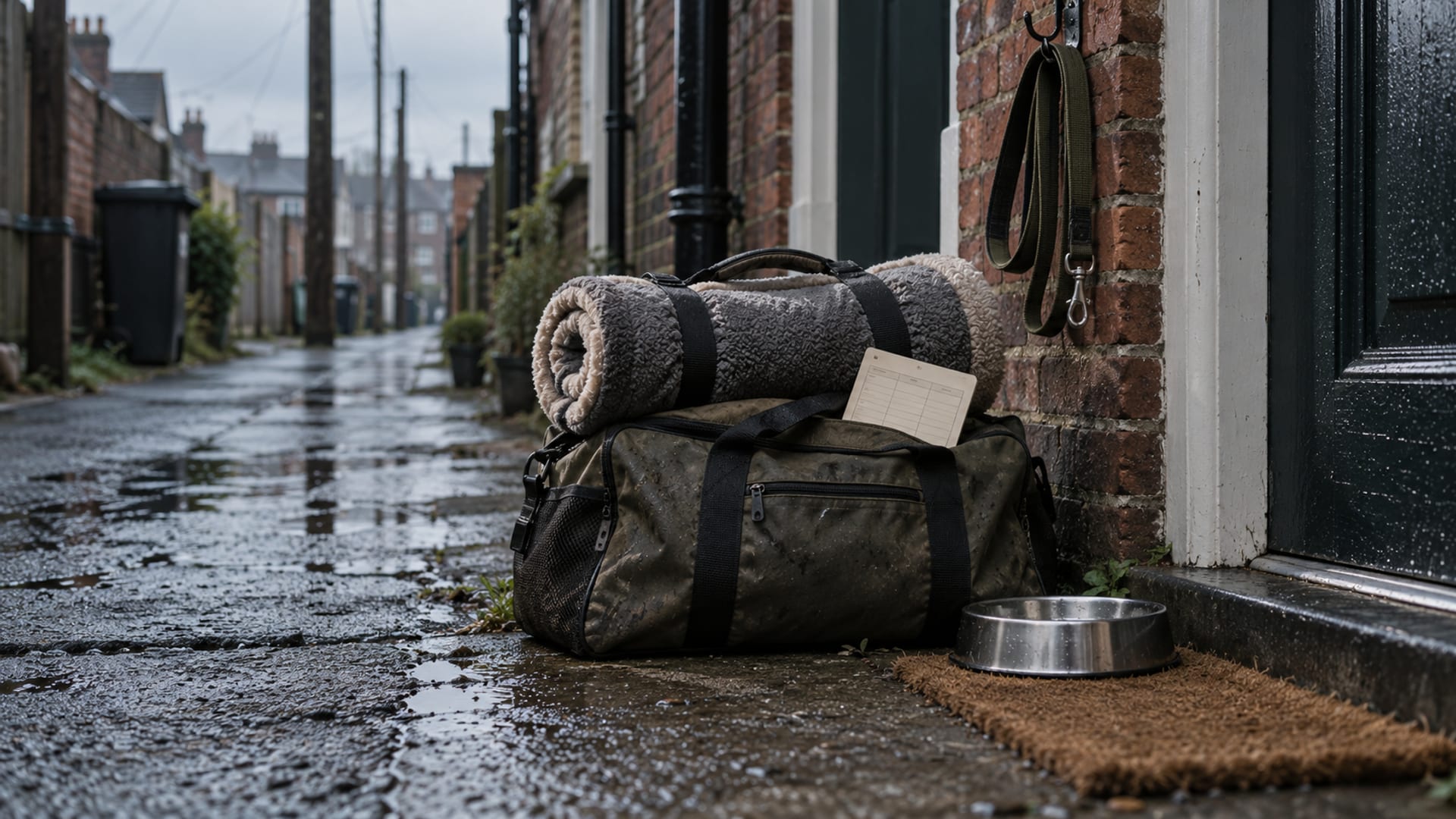
If your dog lunges, barks or snaps at other dogs or people, you already plan the day around it. You walk at odd hours, cross the street early, and keep one eye on every corner in Baltimore. So, sending the dog away for two or three weeks can sound like relief. Board and train for reactive dogs can be a reasonable option for some dogs, and I would not rule it out for yours. But a stay does not hand the problem to the trainer. Your dog learns to respond to the trainer in the trainer's setting, and the behavior only holds at your house if you learn the cues, the handling and the management plan and then practise them. No one can promise you a result for a reactive dog, and you should be wary of anyone who does. If the reactivity is sudden, new, or comes with signs of pain or a bite history, the vet comes first.
Key takeaways
Hover or tap a card to bring it forward.
- Your part matters: A stay does not hand the problem to the trainer, so you need to learn the cues, handling and management plan and practise them at home.
- No promises: No one can promise a result for a reactive dog, and a guarantee is a red flag.
- Treatment basics: Reactivity is treated with management, desensitization and counterconditioning, and sudden changes, pain or a bite history go to the vet first.
- Ask before you book: Get methods, equipment, housing, visits, follow-up and vaccine requirements in writing.
- After pickup: Practise below your dog's threshold in the house, then on familiar walks, then in new places, and book follow-up lessons for hard situations.
What Does Board and Train Actually Involve?
Board and train is a temporary stay where the dog lives with a trainer, or at a trainer's facility, and gets daily training. The American Kennel Club describes stays of two weeks or more, though there is no single industry standard for length or structure. Training can cover manners, leash skills, exposure to new places and behavior work for problems like reactivity.
Most good programs involve you, not just the dog. Expect an intake assessment with written goals, progress updates while the dog is away, a go-home lesson, a demonstration of the cues and equipment, written instructions, and some follow-up support after the dog returns. The AKC advises getting methods and equipment in writing, looking at where the dog will sleep, and requiring visiting privileges. The CCPDT Code of Ethics requires truthful claims and full disclosure of expected results, and it rules out guaranteeing a specific outcome. If you want the service details for my own program, they are on the Board and Train page.
How Is Reactivity Actually Treated?
Knowing the real treatment lets you judge any program, mine included. Veterinary behavior guidance describes three parts that work together.
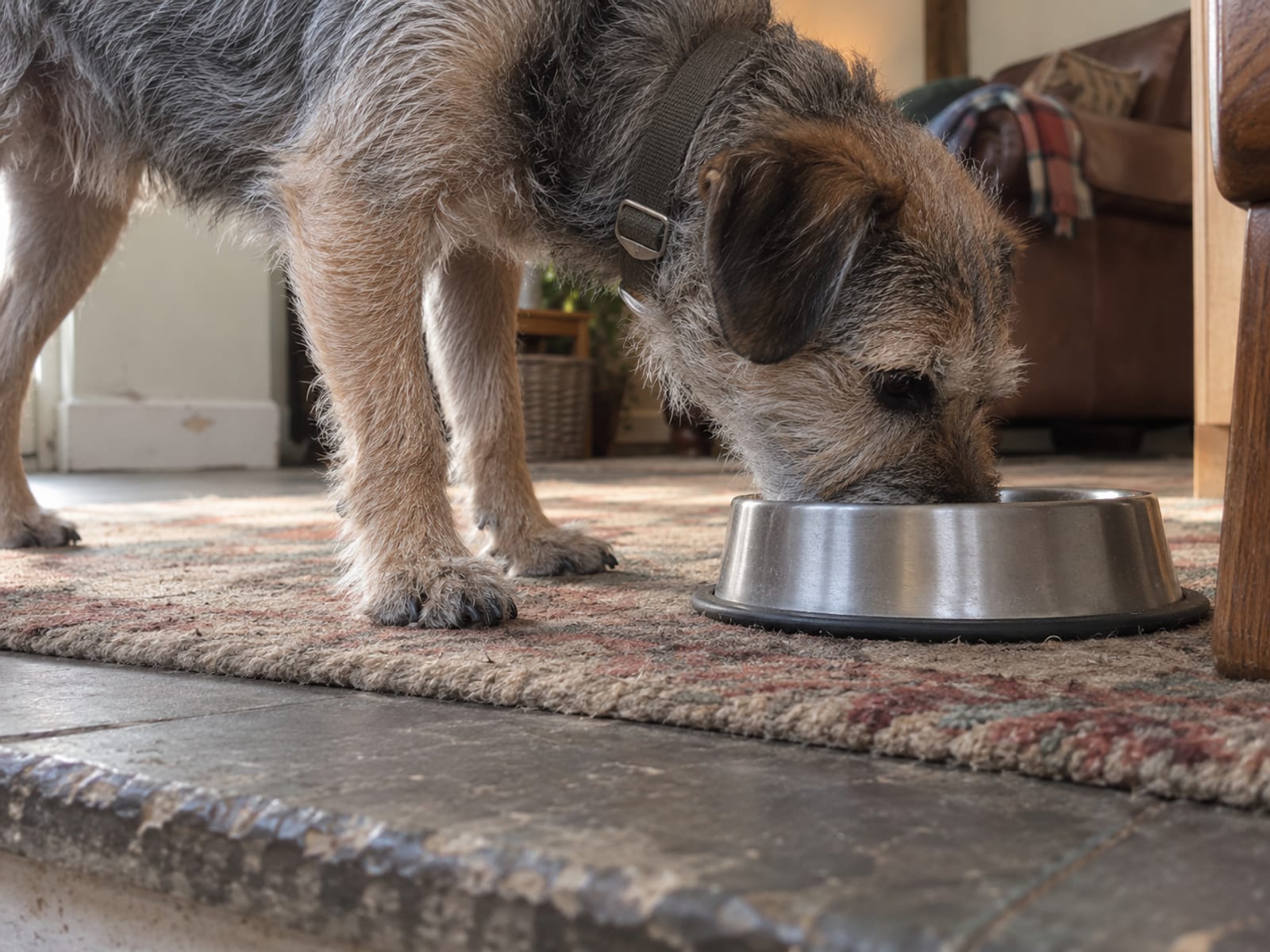
- Management: Keep the dog from rehearsing the behavior. That means more distance, changed walking times or routes, visual barriers, no greetings, and safe separation around visitors and children.
- Desensitization: Show the dog the trigger at an intensity it can handle, then raise the difficulty gradually.
- Counterconditioning: Pair the trigger with something the dog values, such as food, so the dog's emotional response can change.
The dog has to stay able to respond, take a treat and move away. The Merck Veterinary Manual says desensitization and counterconditioning should be used for persistent aggression that comes from fear learning. It also says medical causes need to be diagnosed and treated, without delaying behavior work while that happens. Overwhelming exposure can make fear or arousal worse, so a dog that is thrown into the hardest situation again and again is not being treated.
The American Veterinary Society of Animal Behavior recommends reward-based methods for behavior modification. Its position is that electronic collars, prong collars, choke chains and leash corrections should not be used. I will tell you where I stand on equipment near the end of this post.
A program should be able to tell you which triggers it will work on, how it manages distance and threshold, what safety equipment it uses, how you will continue the work at home, and when it refers a dog to a vet or a veterinary behaviorist. If a trainer cannot answer those plainly, keep asking.
Hover or tap a row to highlight it.
| Part | What it means | What it looks like |
|---|---|---|
| Management | Keep the dog from rehearsing the behavior | More distance, changed walking times or routes, visual barriers, no greetings, safe separation around visitors and children |
| Desensitization | Show the trigger at an intensity the dog can handle, then raise it gradually | Starting far away and closing the gap slowly |
| Counterconditioning | Pair the trigger with something the dog values | Food after the dog sees another dog |
Will the Training Hold Once My Dog Is Home?
The answer depends on what happens after pickup. A few studies help explain why, though none of them tested board and train.
Range, Hentrup and Viranyi ran a PLOS ONE experiment in 2014 with 39 pet dogs. The dogs learned a rule from one person, and their performance varied depending on who was present and how the test was set up. A rule learned with one person did not carry over evenly to other people and conditions. That is why practice with you, and in new places, matters.
Stevens and colleagues followed 99 dogs in Canine Good Citizen classes (Animal Cognition, 2021). Time spent training and owner characteristics predicted success. That was a group-class obedience study, not a study of reactivity. Rooney and Cowan (2011) looked at 53 owners and their dogs. Owners who reported using more rewards had dogs that did better on a new task. That is an association, not proof of cause.
The AKC gives a simple example of the same point: a dog that learns to wait at the trainer's doorway does not automatically wait at your front door. The dog meets different streets, smells, distances, dogs and people near your home, and the behavior has to be practised there. A trainer's success with your dog away from home does not mean residential training settles reactivity for good.
What Will My Dog's Days Be Like?
Residential care can mean unfamiliar people, separation from you, confinement, noise and other dogs. Some dogs handle that well. Some do not, and a dog who is already reactive may find it harder.
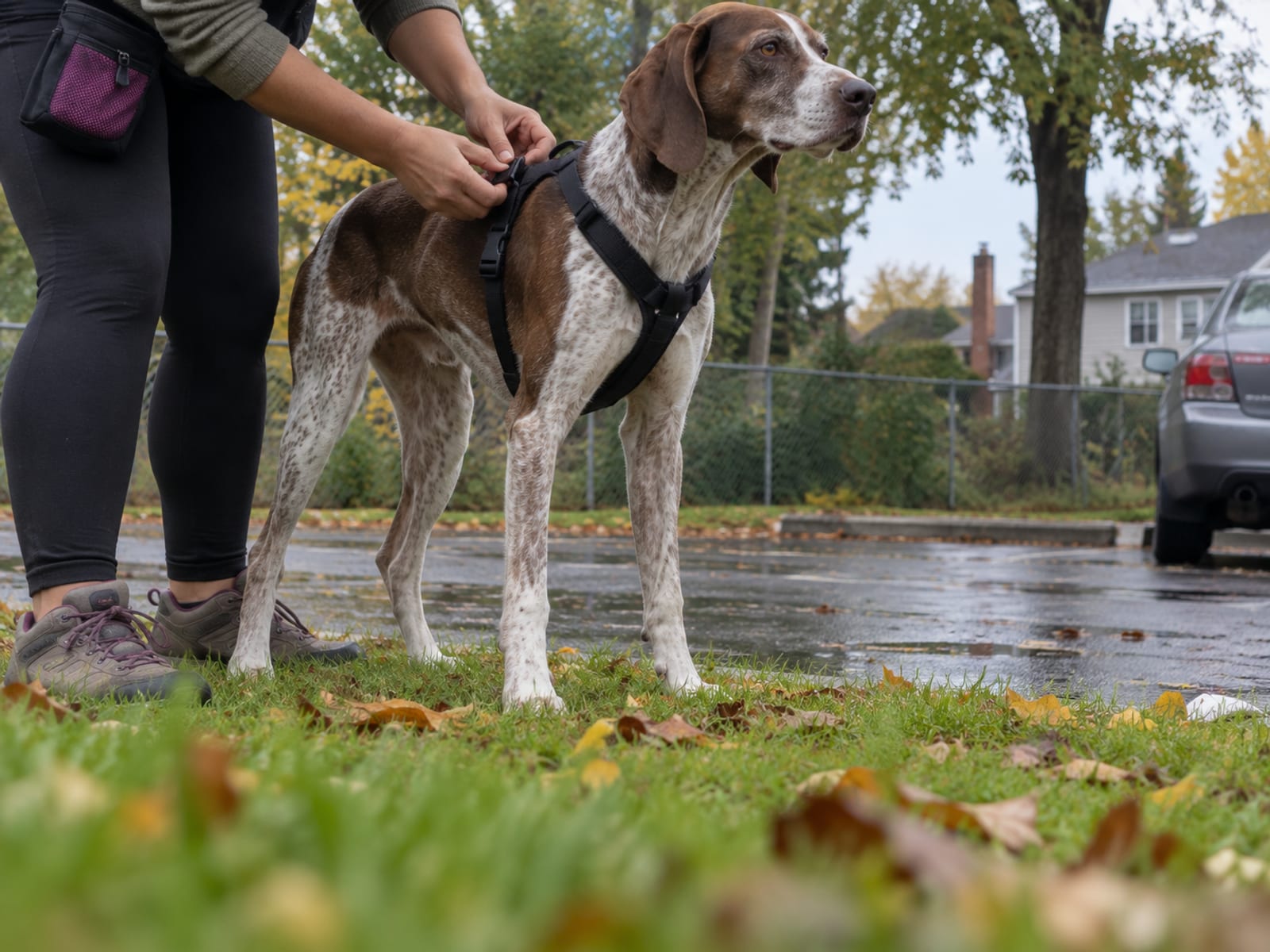
Part and colleagues (2014) compared 29 pet dogs at home and in boarding kennels and found higher urinary cortisol in the kennel. They also found large differences between individual dogs and did not show that every dog was distressed. Stephen and Ledger (2006) followed shelter dogs for 31 days. Cortisol was higher on every sampling day but the last and peaked on day 17.
Two studies looked at pair housing. Grigg and colleagues (2017) studied 12 dogs in a veterinary school kennel colony, and Hecker and colleagues (2024) studied 61 shelter dogs. Both used kennel or shelter populations, so they do not tell you what a private training home will be like. A home setting may take away some kennel demands, but it does not guarantee a calm dog.
So, ask the trainer these things before you book:
- Sleeping: Where does my dog sleep?
- Confinement: How long will my dog be in a crate, kennel or room each day?
- Exercise and enrichment: How do exercise, rest and enrichment happen?
- Other dogs: How are dogs kept apart, and how is any contact controlled?
- Stress: How do you recognize stress, and what happens if my dog cannot settle?
A dog that reacts strongly to other dogs, or one that is stressed by kennel time, may not suit a program built on group play or frequent kennel stays. Say so up front.
Hover or tap a row to highlight it.
| Study | Dogs and setting | What it found |
|---|---|---|
| Part and colleagues, 2014 | 29 pet dogs, at home and in boarding kennels | Higher urinary cortisol in the kennel, with large differences between individual dogs |
| Stephen and Ledger, 2006 | Shelter dogs followed for 31 days | Cortisol higher on every sampling day but the last, peaking on day 17 |
| Grigg and colleagues, 2017 | 12 dogs in a veterinary school kennel colony | Hair cortisol fell in the pair-housed dogs, but only 2 of the 8 showed clear drops in stress behavior |
| Hecker and colleagues, 2024 | 61 shelter dogs, 30 housed alone and 31 in pairs | Pair-housed dogs showed less lip-licking, whining and ears-back, and two pairs were split after aggression |
What Should I Ask, and What Should Worry Me?
Ask for answers in writing before you pay a deposit. These are the questions I would want answered if the dog were mine.
- Methods and equipment: What exact methods and equipment will be used, and what happens if the dog becomes fearful or cannot work?
- Daily routine: How many training sessions happen each day, who handles my dog, and what is the plan for rest and exercise?
- Updates and visits: Will I get video updates, can I visit, and will you tell me right away about illness, injury, escape or a bite?
- Go-home and follow-up: Is there a go-home lesson, a written plan and follow-up support, and what do extra lessons cost?
- Business terms: Do you carry liability insurance, what is the emergency vet policy, and what are the cancellation and refund terms?
These are the red flags that would make me walk away:
- Guarantees: Anyone who promises a cure.
- No written methods: A refusal to put methods and equipment on paper.
- No access: No chance to see where the dogs live, and no visits.
- No handoff: No owner lesson, no written plan and no follow-up.
- Bite history ignored: Taking a dog with a bite history without a detailed safety assessment.
- Video only: Claims that rest only on video of the dog working for the trainer.
- Pressure: Being pushed to enrol before your questions are answered.
On vaccines, Maryland requires rabies vaccination for dogs from four months of age, and the Baltimore City Code requires a current rabies certificate for dogs. Every other vaccine is set by each facility, so get the requirements before you book and ask your vet which vaccines suit your dog.
What Do I Do When My Dog Comes Home?
The work you do in the first weeks decides how much of the training stays. Use the same cues, equipment and handling plan you were shown, and follow these steps.
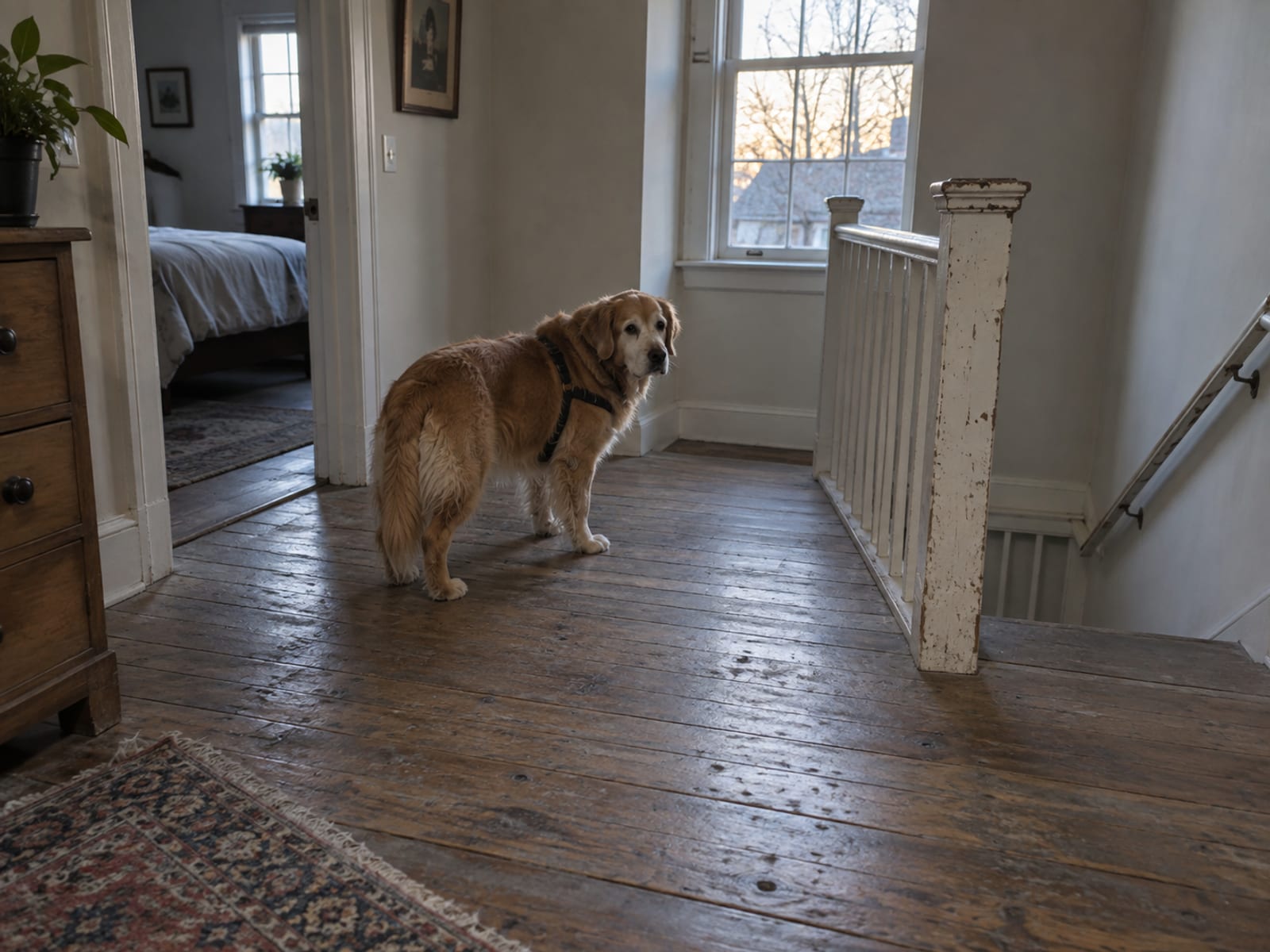
1. Find your dog's workable distance from people and other dogs, the distance at which your dog can still notice a trigger and take a treat. 2. Practise below that threshold. Reward your dog for noticing a trigger and looking back at you. 3. Raise the difficulty slowly, one small step at a time. 4. Change your route or add distance whenever you need to, and prevent repeated lunging and barking, since each rehearsal makes the habit stronger. 5. Practise in the house first, then on familiar walks, then in new places. 6. Book follow-up lessons for the hard situations, such as a narrow sidewalk or a busy park.
If the walks are where your dog struggles most, leash reactivity is one of my named specialties.
Some situations go to a vet first. Call your vet before any training if the reactivity is sudden, your dog seems to be in pain, a senior dog's behavior has changed, a medication has been started or stopped, or there is a risk of a bite. A veterinary behaviorist is the right call when the reactivity is severe, there is a bite history, or you cannot keep everyone safe. Until your dog is assessed, use separation, distance and supervision, and do not punish a dog who is showing fear.
Your First Weeks at Home
- Find the workable distanceThis is the distance at which your dog can still notice a trigger and take a treat.
- Practice below that thresholdReward your dog for noticing a trigger and looking back at you.
- Raise the difficulty slowlyMake one small step at a time.
- Change the plan when neededChange your route or add distance, and prevent repeated lunging and barking, since each rehearsal makes the habit stronger.
- Widen the placesPractice in the house first, then on familiar walks, then in new places.
- Book follow-up lessonsUse them for hard situations, such as a narrow sidewalk or a busy park.
Hover or tap a row to highlight it.
| Situation | Call | Until then |
|---|---|---|
| Reactivity that is sudden or new | Your vet, before any training | Use separation, distance and supervision |
| Signs of pain, or reacting when approached while resting | Your vet | Do not punish a dog who is showing fear |
| A senior dog whose behavior has changed | Your vet | Use separation, distance and supervision |
| A medication recently started or stopped | Your vet | Use separation, distance and supervision |
| Severe reactivity, a bite history, or you cannot keep everyone safe | A veterinary behaviorist | Use separation, distance and supervision |
Who Do I Serve Around Baltimore?
I take board and train dogs into my own home, not a kennel, and I serve towns within about an hour of Baltimore. My service area overall runs about two hours, from Baltimore to Washington, DC. If you are not sure whether your town is in range, call me and ask.
What Does Board and Train Cost With Me?
The two-week on-leash program is $3,600. The three-week on-and-off-leash program is $4,800. You can also choose a la carte training at $175 per hour plus $60 per day for boarding. Equipment is included, and a payment plan is available. My page on board and train in Baltimore has the local details.
We start with a phone consultation. If it still looks like a fit, the next step is a $100 in-home evaluation, which rolls into the training fee, and there is no obligation. If a stay is not the right fit for your dog or your household, in-home private lessons from $700 are the alternative.
Hover or tap a row to highlight it.
| Option | Price | What to know |
|---|---|---|
| Two-week on-leash program | $3,600 | Equipment included |
| Three-week on-and-off-leash program | $4,800 | Equipment included |
| A la carte training | $175 per hour plus $60 per day for boarding | Equipment included |
| In-home private lessons | From $700 | The alternative if a stay is not the right fit |
| In-home evaluation | $100 | Rolls into the training fee, no obligation |
Frequently Asked Questions About board and train for reactive dogs
Q: Does board and train work for a reactive dog? A: It can for some dogs, but only when you take part. The dog has to learn to respond to you, in your neighborhood, using the same cues and management plan. Nobody can promise the result, so be careful with anyone who does.
Q: How long is a typical stay? A: The AKC describes stays of two weeks or more, and there is no single standard. My programs run two or three weeks.
Q: What does it cost with DW Dog Training? A: Two weeks on-leash is $3,600 and three weeks on-and-off-leash is $4,800. A la carte is $175 per hour plus $60 per day for boarding. A payment plan is available.
Q: Should I see a vet before I book? A: Yes, if the reactivity is sudden or new, your dog may be in pain, or there is a bite history. Medical causes can sit behind reactive behavior, and your vet can also tell you which vaccines your dog needs.
Check What You Picked Up
What makes the training hold once your dog is home?
What should make you wary of a board and train program?
Which step comes first when your dog gets home?
When does the vet come first?
Which of these is a question to ask before you book?
Answer a question to see your score.
Final Thoughts
Board and train can help a reactive dog, but it is only one part of the work. The dog learns in the trainer's setting, and the rest depends on what you practise at home. Ask about methods, housing, visits, follow-up and vaccines before you book, and walk away from guarantees.
Doing the home practice well can give you walks that no longer need planning around the neighborhood. That is worth more than a dog who behaves for one person for two weeks.
I have trained dogs since 2001, and I run DW Dog Training in Baltimore, MD. My approach includes e-collar work among other tools, so ask me about equipment just as I have told you to ask anyone else. Call to talk through your dog, or book the $100 in-home evaluation, and I will tell you straight whether a stay or private lessons suits you better. You can contact DW Dog Training to get started.